/CASE STUDY
CONTEXT
Haas Automation is one of the largest CNC machine tool manufacturers in the world, building the mills, lathes, and rotary systems used in factories and machine shops across the globe, and is also widely known for owning the Haas F1 Team in Formula 1 racing.
Haas Automation set out to build its first ecommerce platform, HaasTooling.com, giving customers a direct way to buy the tools that keep their machines running.
ROLE&DESIGNAPPROACH
As Lead UX Designer, I owned every design decision on HaasTooling.com, from information architecture and flows to UI and the component system. I was the sole UX designer on the project, working daily with the PM, engineers, and Haas stakeholders to turn strategy into a shipped platform.
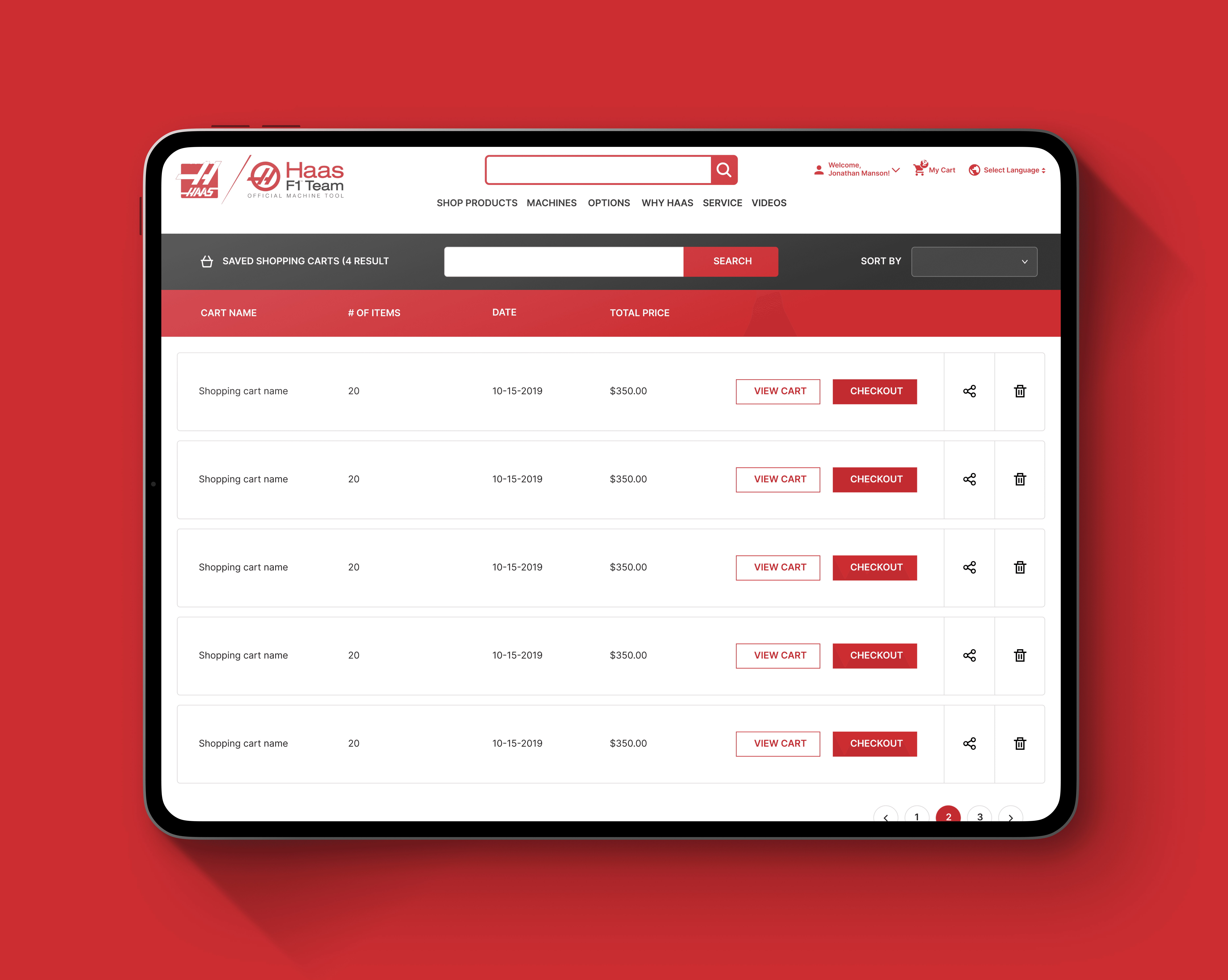
Haas had no ecommerce precedent to build from, so I approached it in phases: discovery and stakeholder alignment, information architecture and user flows, wireframes and prototyping, and a final UI backed by a component system for dev handoff. The core shopping journey came first (search, PDP, cart, checkout), followed by the account and order management experiences that made the platform usable for repeat customers.
OUTCOME
The platform shipped and gave Haas its first direct-to-customer channel, replacing a buying experience that used to mean hours of digging through catalogs and disjointed websites. Since launch, HaasTooling.com has sold over 450,000 tooling products to machine shops, engineering firms, and educational institutions across the US.
UXCHALLENGES
- Incorporating a shopping experience to the current experience.
- Heavy and advanced catalog to cater to both versed and non versed shoppers.